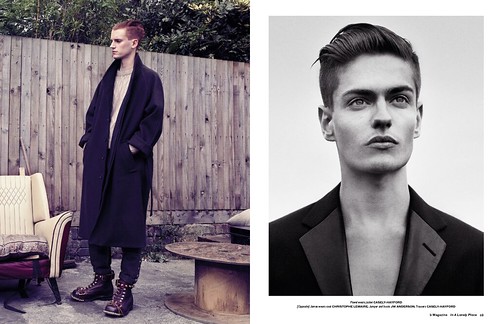
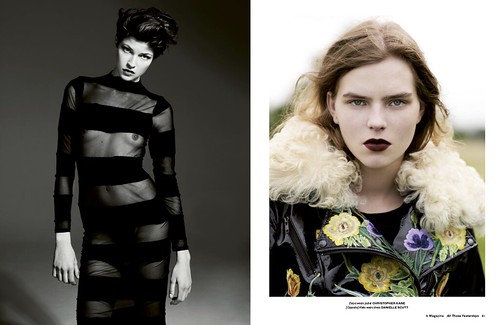
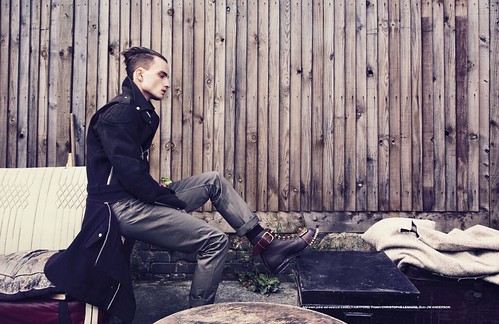
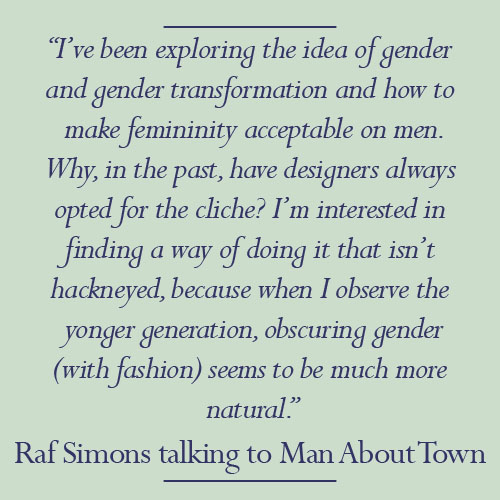
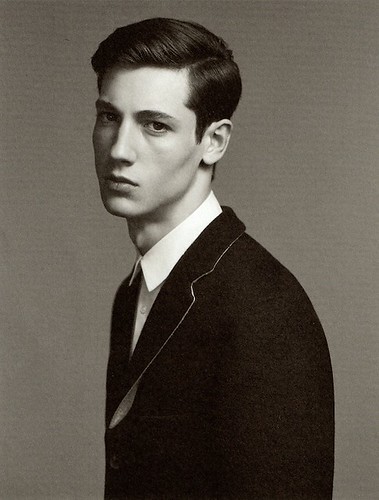
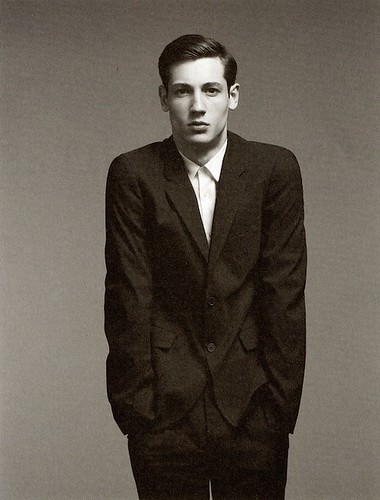
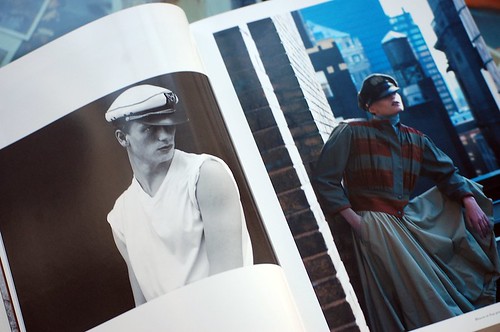
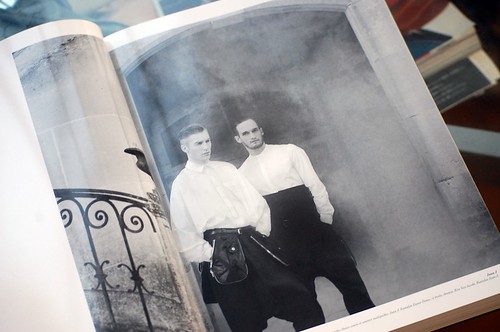
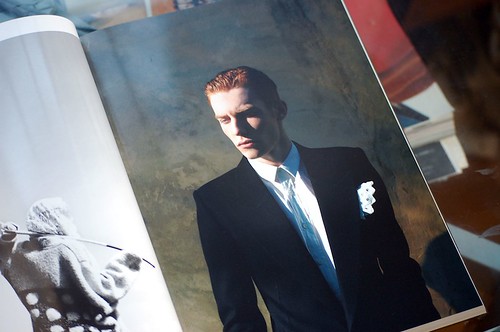
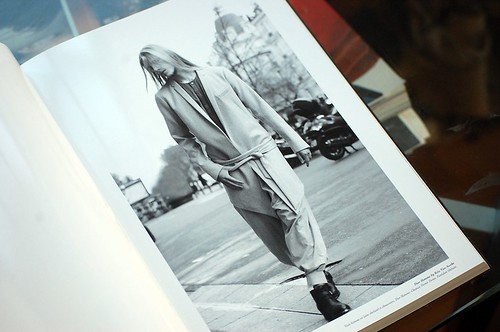
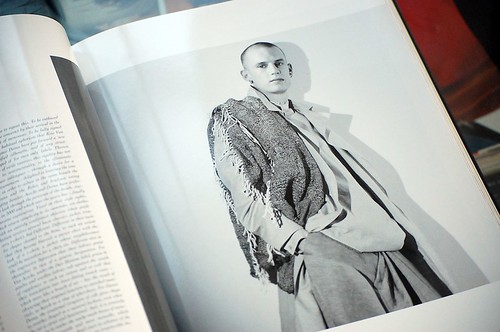
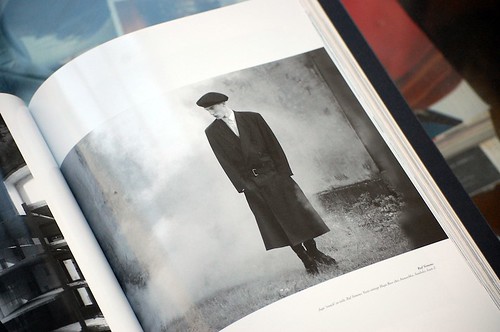
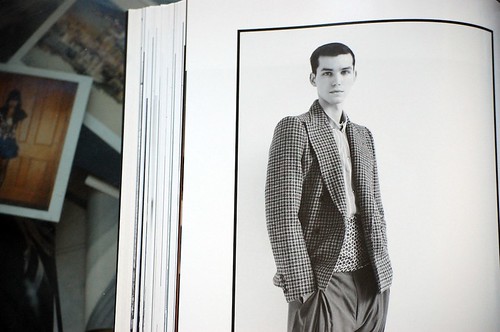
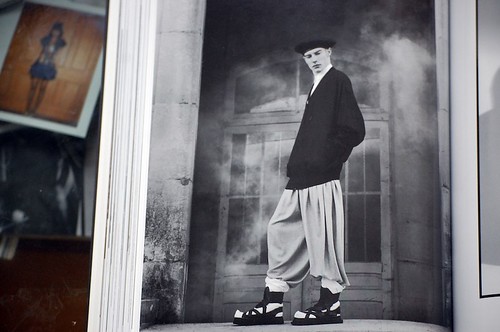
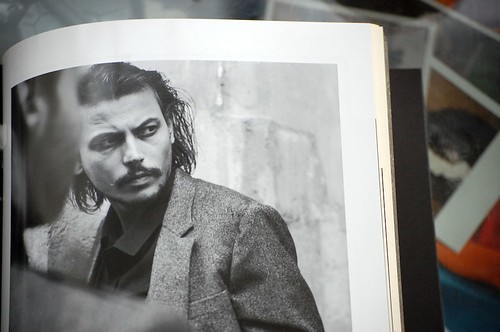
This scene is pretty close to my perfect Sunday morning. A quick stroll to the shops in search of a fresh out of the oven almond croissant to accompany a freshly brewed post of coffee and a hot off the press men's magazine. A great deal has been said on the recently launched quarterly publication, Port, so at this point I just want to enjoy the read. I hope you have rubbed the sleep from your eyes and are enjoying this Sunday morning as much as I am.
Showing posts with label magazines. Show all posts
Sunday, March 6, 2011
Thursday, February 24, 2011
Amazing Things From Old Teen Magazine
God only knows what fleeting train of thought led me down the rabbit hole from which I fished these retro teen magazine gems, but I'm definitely glad I fell down that hole
Cameron Diaz, back in 1990. There's no way anyone could possibly have THAT much American pride without spontaneously combusting into a dangerous downpour of fireworks.
This is SO batshit and awesome. It's from Teen magazine 1971 (via the EXCELLENT Kitschy Kitschy Coo). Clearly the editors of Teen were huffing glue, but that doesn't stop me from wishbing I had a pair of ABSURDLY chunky Hawaiian Punch platforms. Also, could you really even imagine a teen or even women's magazine today suggesting you make an ass out of yourself just for the sake of it being fun?
Teen magazine, 1975. Again, everyone was probably high and had crazy eyes.
![]() |
| (Credit: Seventeen) |
OBVIOUSLY the most notable thing about this 1984 issue of Seventeen, which featured Diane Lane on its cover, is the cat. WHY can't more magazines have a cat on their cover? If you have a magazine, it should be a LAW that you have to feature a cat on your cover at least once. That's great for sell-through, right? Also, like WHY is that a FULL-GROWN cat? His paws are like the size of half a Diane Lane. You can tell that behind that half-assed smile is terror. That cat is not fucking around. Also, note the "Nice guy Tom Cruise" photo inset in the left-hand corner. I wonder if he did that squirrely, high-strung "heh-HEH!" laugh back in '84.
![]() |
| (Credit: Seventeen) |
Oh man. Winona! Back in 1990, when she dressed like an Amish boy but totally pulled it off. Wino forever. This makes me wanna go to Saks and check out their sweater selection.
![]() |
| (Credit: Seventeen) |
This is SO batshit and awesome. It's from Teen magazine 1971 (via the EXCELLENT Kitschy Kitschy Coo). Clearly the editors of Teen were huffing glue, but that doesn't stop me from wishbing I had a pair of ABSURDLY chunky Hawaiian Punch platforms. Also, could you really even imagine a teen or even women's magazine today suggesting you make an ass out of yourself just for the sake of it being fun?
Teen magazine, 1975. Again, everyone was probably high and had crazy eyes.
Saturday, November 20, 2010
Weekend Reading Tip: 032c
Having complained that my blog reader had been inundated with what appeared to be two cloned posts the twentieth issue of 032c is the perfect antidote. Now, it is time to step away from the seemingly ever present and comforting glow of the computer screen and instead focus my gaze on the two hundred and sixty four pages. What began as a DIY, experiment exploring the possibilities of print has grown in to an archetypal magazine that effortlessly fuses art, culture and fashion in a lip smackingly good cocktail. The intelligence and freshness of its content is always something to savour and this issue is thankfully no different. Highlights include (deep breath) a forty page dossier on Rei Kawakubo, a closer look at Acy'teryx's efforts of pushing performance wear forward with its new line Veilance, Rem Koolhaas dicsussing Moscow's new Strelka Institute, David Simon talks anger and the American city while 032c’s latest Select presents the best of this season’s books, products, and ideas.
The twentieth issue of 032c offers welcome relief to the printed culture ennui that most of us have felt in recent years. It is the very antithesis of the quick flick through before throwaway publications that are struggling on the newstands. Now, it is time for another cup of tea and read.
Thursday, November 4, 2010
Preview of b three
As readers of this blog you should all know by now that London’s b store has long been a mecca for contemporary design. Whilst nurturing some of the best menswear design talent in the capital and beyond, b store have been merging art, fashion and design seamlessly for a number of years now. With each visit to the Savile Row institution, there is the chance to discover a new designer, an exhibition, a magazine or even just a moment when you talk to them and leave with something new. You can always expect to be surprised when you visit the store. Though undeniably a stylish haunt, it has always been more than just a physical space and has certainly offered more than mere fashion. It was therefore, a natural evolution of the brand to venture in to print and thankfully b magazine reflects the energy of the brand beautifully. We have been fans the moment our eager hands grasped the first issue back in September 2009. Created by b clothing’s Creative Director Jason Hughes and Editor Dal Chodha, the magazine exposes the wider b Store ethos; passion in design and integrity in individuality with a knowing nod to more sartorial affairs.
It sells ideas and it sells information. Editorially driven, b magazine looks at creatives from a wonderfully unique angle. The world it weaves through and explores means that this is a publication that is nigh on impossible to put down. It concerns itself with what they are reading, rather than what they are wearing and worries more about familiarity than fantasy. To mark the imminent release of the issue three (Monday 8th November) which includes insightful pieces on BLESS and Stephan Schneider, we caught up with both of its creators to discuss the issue over a cup of coffee and a cinnamon bun. What follows is our meandering conversation and a sneak peek inside the issue...
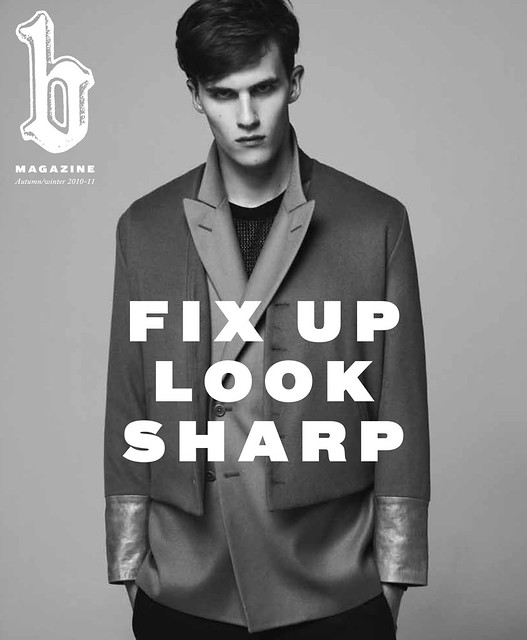
The cover of issue three.
SS: The magazine feels like a natural evolution of the b brand on to printed paper as it exposes the wider b-Store ethos. What were your inspirations, your dreams and the driving catalyst behind b magazine?
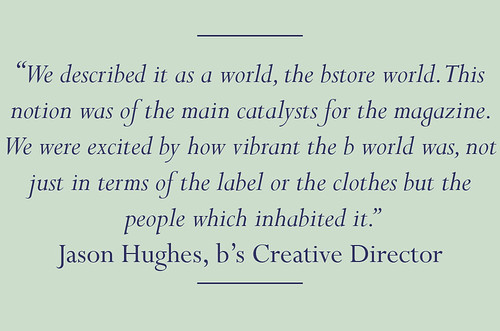
Jason Hughes: I've been working with both Matthew (Murphy) and Kirk (Beattie) from the very first collection and even before that point I worked with Carola Euler who was stocked at the store, so I've known the store and the guys for some time now. We had a very casual conversation about the magazine with them, Dal and myself were clear that there were certain things that we wanted to do and certain things that we didn't want to do. Primarily, we did not want it to be another fashion title because we both felt that there already were enough titles out there, some of which were doing it very well, some doing it not so well. It was very important to us that we were crating a magazine that came from an alternative point of view to anything already out there. We talked to Matt and Kirk about the store; the designers they stocked, the people who shop there or those involved in the store in some way, be that artists who have shown in store or creatives who they have collaborated with in some way and at this point we realised that this was more than a lifestyle. We described it as a world, the bstore world. This notion was of the main catalysts for the magazine. We were excited by how vibrant the b world was, not just in terms of the label or the clothes but the people which inhabited it. More than that though, this pool was a massive source of content for us.
SS: By the very nature of the store, the magazine is much more than an in store publication...
Dal Chodha: In a way it felt like an untapped pool of content. Such amazing people that come in either to shop or interact with it in some capacity.
Jason Hughes: Hopefully the magazine reflects the energy of the store. You can always expect to be surprised when you visit the store, there is going to a new designers, exhibition, magazine in the book corner or even just a moment when you talk to them. The store has always been about the new and I've always admired it for that. Matt and Kirk have always put themselves out there to discover a new designer and to support them, some of whom they have continued to support and some might have fallen off but they've always had a strong relationship with them and grown with them. I've always admired their ability to discover and nurture and this certainly fed in to the publication. At no point did we want this to be an in store magazine but rather, we have always wanted to create a lifestyle publication. Welcome to our world, it is an exciting place.
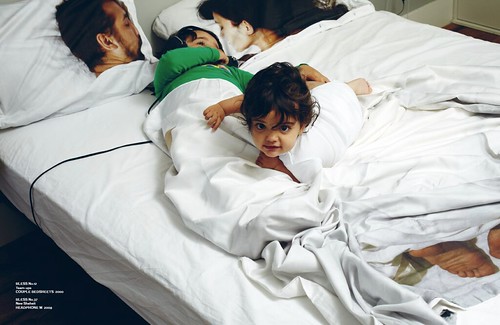
Unclassified. Welcome to the world of BLESS. Words by Ben Purdue, photography by Franck Sauvaire with Jane Howard as fashion editor.
SS: What was the starting point for the third issue? How did it evolve?
Dal Chodha: It is important for us to offer something that our readers cannot get anywhere else. The research aspect for each issue is the hardest part because we discuss topics that you can only know if you have a personal relationship with the people involved. For example, with regard to the collectors feature in this issue there is no way that your average pr would have that type of information. There is a natural progression from the last issue. We discussed the last issue and ideas on where we would like to take it, areas that we'd like to explore and expand on and this is particularly true within the articles.
Jason Hughes: We tend to have a lot of ideas and there is only a certain you can actually cover in one issue without it becoming repetitive.
Dal Chodha: We are friends as well, so outside of the magazine we share a great deal. We both have folders on our desktops as all of us do of ideas that have captured our imagination so when we meet we both discuss what we have found. For me, my main focus in the features is to talk about people that haven't been exposed in the way they deserve.
B for Baracuta. The SS11 collaboration is previewed. Words by Dal Chodha, Photography by Laurence Ellis with Jason Hughes as Fashion Editor.
SS: I have really enjoyed the recent designer features, Chrishophe Lemaire in the last issue and now Stephan Schneider. These are names people might be familiar with but your features bring them to life. I have to confess that I knew very little about Christophe before his stunning AW09 collection, that collection really made me take notice of his work. So your feature was extremely well timed...
Dal Chodha: Exactly, we've taken this ethos from bstore really. To highlight brands that people in the know, know about but our job is to promote them in a way that is fitting of their talents. We want to take them and elevate them as much as we can. Christophe's work for example is amazing but not enough people know about him or his work.
Stephan Schneider. In conversation with. Words by Dal Chodha and photography by Stefan Heinrichs.
SS: I found it interesting to observe the knock on effect of your feature on Christophe Lemaire. Quite a few publications and websites featured him following your issue launch. He was now on the radar, of course his appointment of Hermes magnified this even further...
Jason Hughes: The Hermes appointment was amazing timing really. We knew nothing about it at the time, neither did Matt.
Dal: It was announced three weeks after I met him in Paris. Of course he would have known but it wasn't mentioned during the course of our discussion.
Jason Hughes: It was really interesting when Tim featured him on style.com and did a review of the show. I think that was partly because of the last issue as well. For us, it felt like the right time to introduce him to a wider circle.
Dal: Both Christophe and Stephan have been in the industry for many, many years and that for us, is an important aspect of fashion. It is, after all a business as well as being inspirational. These guys have built solid foundations for selling clothes.
Jason Hughes: The designers that we feature and shoot are ones that tend not to tackle ephemeral trends and both Christophe and Stephan have certainly shied away from this aspect of fashion. They are much more interested in creating a highly distinct style and in cultivating collection upon collection.
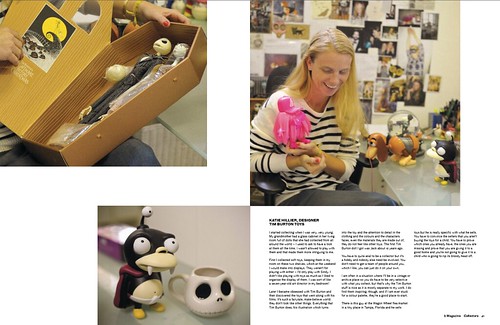
The Collectors. b meets four collectors and discovers the UK's largest collection of vintage Hawaiian ukuleles along the way. Words by Dal Chodha and photography by Clare Shilland.
SS: Within the issue you introduce four collectors and their carefully curated obsessions, including Fraser Moss' vinyl and Katie Hillier's Tim Burton toys. Are either of you collectors?
Jason Hughes: Only obvious things but nothing that specific.
Dal Chodha: Me neither but I think that is what attracted us to this feature even more. It really was a nightmare to research because people kept coming back with "I collect magazines and these inspire my collection' but we wanted to go deeper and unearth a selection of unusual collections.
Jason Hughes: I've always been interested in people that have obsessions. The feature actually began when we had a discussion about fans, from fans of bands to Japanese girls who hoard Chanel bags, this then evolved in to people who obsessively collect things. it is amazing to love something so much. I think Katie's obsession with Tim Burton toys is the most fascinating, she even talks about how the toys inspire her and when she is stuck for a colour palette she goes to her toys, for me that is just genius.
Dal Chodha: These types of features are always so intimate and enjoyable to work on. Clare (Shilland) and I went to each of their houses and you can't help but become enamored with their collections. These people tend not to be asked about these passions.
Jason Hughes: I've always liked the feeling of when you think you know somebody but then discover what is behind that. It is always very interesting, what is behind this hardcore fashion person.
Furniture. Meet the future of furniture design. Words by Lewis Chong and photography by Retts Wood.
SS: Looking back over the issue now, is the collectors feature your highlight?
Jason Hughes: Actually, I really enjoyed the furniture article. For both of us it is a real highlight of the issue and it was borne out of a conversation with Matt, both of us are interested in furniture design, and we began this quest to find the new furniture designers. It was a lengthy process that went on for months but we are so pleased with the results.
In A Lonely Place. Photography by Nicholai Fischer with Jason Hughes as Fashion Editor.
SS: Despite my obvious love of digital media, I have enjoyed a love affair with printed fashion journalism for many years. What were the magazines that you just had to buy each month, quarterly or biannually? Are there any today that still excite and inspire you?
Jason Hughes: Funnily enough, if I were to be obsessive about anything it would be with magazines. I grew up in the 90s idolising magazines like iD and The Face. I'm from a small village in Wales and these magazines acted as escapism but they also informed me and opened my eyes to lots of things. Some of that has had a lasting legacy on me. There was a point in time when they were barometeres of style but times have changed. Now, I like lots of smaller, independent magazines, similar to those that Matt likes actually. The ones that have a distinct personality and are quite niche, obsessive about their subject matter. Aparamento is a great example, so inspiring. The layout is interesting, the people thy feature and their whole perspective of the home is very interesting. It is an antidote to Homes & Garden. I also love 032c, it is one of the only magazines that has been able to successfully merge disciplines of art, design and fashion.
Dal Chodha: I have quite a romantic vision of magazines. I like having to sit and stop and taking time out and magazines should slow people down. I'm not particularly loyal to any title.
Jason Hughes: It is important for me that there is something to read in the magazine, it isn't just a . There should be well written features that are informative and exciting to read. There has to be a balance.
All Those Yester Days. Photography by Willem Jaspert and Sam Ranger as Fashion Editor.
SS: There is certainly that balance in b. How do you see the publication developing in the issues ahead?
Dal Chodha: Thank you. We are really pleased with the balance and we will continue along the same path in future issues. We always have so many feature ideas but for us it important not to overload the reader with information. A magazine should be able to be consumed relatively easily, we just want to create something that can be enjoyed and kept for reference.
In A Lonely Place. Photography by Nicholai Fischer with Jason Hughes as Fashion Editor. .
_____________
In the tricky world of magazine publishing, b Magazine offers a welcome antidote to the over saturation of information on the market, which has led to a dilution of intelligent and informed journalism. It challenges the way we consume, interspersing inspired wisdom with intuitive photography within the traditional format of a fashion and lifestyle title. I'm without doubt that your coffee table or book shelf will be a better place with the addition of this publication so please do pick up a copy next week.
Tuesday, November 2, 2010
Simons as a man for all seasons
"When I think about menswear and its universe the person that makes me think far beyond what is possible and what can be made possible is Raf Simons of whom you left out in your post. His training and his discipline alone has really carried out this lucid path for younger designers such as Ervell to make their own niche and success."
Following my last post on the Patrik Ervell feature in the latest issue of Man About Town, Mike H, a new commenter, left the above paragraph. I could not agree more. Funnily enough, even before this comment had been left I had begun drafting a post on Raf Simons. Once again I had been inspired by a thought provoking feature in Life's a Beach - The Winter Sun Issue. A Man For All Seasons celebrates one of the most influential designers.
There has never been a bad Raf Simons collection. Merely quite good ones, very good ones and a few that have set new standards in modern fashion. He is quite simply one of the great innovators. As a designer, Simons' clothes are instantly recognisable by their uncompromising modern edge which seems him blend his admiration for the underground European pop culture of the 70s and 80s with his quest to define the times we live in. There is much that makes Simons unique but it his ability to engineer fashion change while never really changing himself. His ideas of youth culture and angst are ever constant regardless of whether he is designing for his eponymous label or under the name of Jil Sander.
As you should all know by now, both of us are interested in the interplay between the social constructs of masculinity with style and menswear. Fashion often challenges the hegemonic ideals and this is no more apparent than in the designs of Raf Simons. Within menswear you can't pull any tricks and Simons concedes that he puts limits on himself because of what society thinks a man should be. Thankfully, Simons personally doesn't know exactly what a man should be. This questioning is precisely why he will tweak and experiment with his design, be that by casting rakish teens to model his collections to spark trends for skinny boy tailoring or exploring how men can adopt more feminine ways of dressing without falling in to the more obvious trap falls.
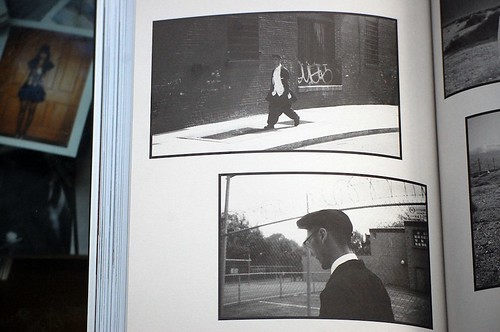
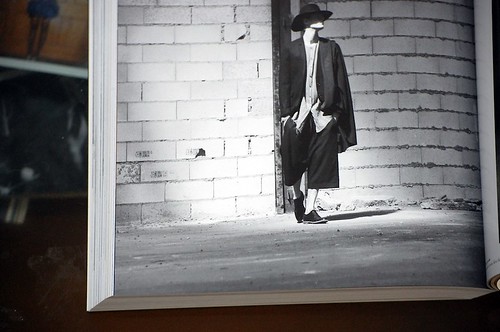
A Man For All Seasons. Photography by Willy Vanderperre and styling by Olivier Rizzo. All looks from Jil Sander AW10.
Simons is a designer who isn't so interested in designing clothes. That sentence might sound odd at first but all becomes clear when you look through his body of work. Simons is a designer interested in visualising an idea, a concept and an ideology.
Monday, November 1, 2010
Ervell and the balancing act
Having had my love affair with the printed word reignited by the wonderful and inspiring read that was Encens 26, I found myself seduced by the stylish possibilities hiding behind the age defying pose of Pharrell Williams in the latest issue of Man About Town. 'Life’s a beach – the Winter Sun' is the second issue with Paris-based creative consultancy Atelier Franck Durand and editor, Philip Utz at the helm. Despite being distracted by the youthful appearance of the cover star, the two hundred and forty six pages demonstrate that this is a bi-annual to truly covet. The autumn/winter 2010 issue offers a means of escape.
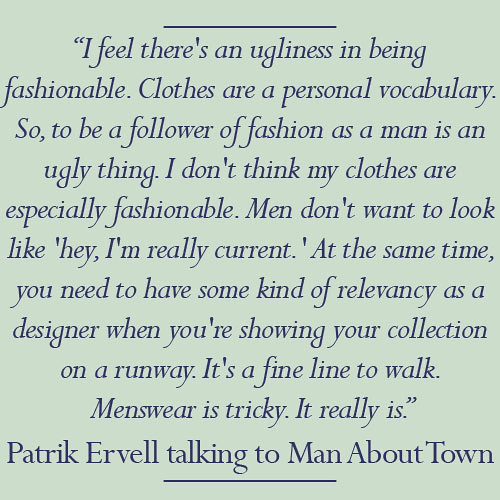
The issue has been mentioned on various blogs over the last couple of weeks but rarely have I read exactly why it was enjoyed. For me, this is a shame and something I'd like to rectify now. The real highlight of the issue is a series of profiles on the current generation of Manhatten based menswear designers who have been slowly but surely laying the groundwork for New York's new school of menswear. Adam Kimmel, Italo Zucchelli, Thom Browne and Patrik Ervell are four of its brightest stars and despite their differing aesthetics all are aware that wearability, durability and commerciability are all integral facets of successful menswear. Each profile prodded and probed the designer quad in terms of their style and business credentials and the twelve page spread was thoroughly insightful read. Having enjoyed each, there was only one that really left me stroking my imaginary beard whilst pondering their thoughts. The following extract from Ervell was of particular interest...
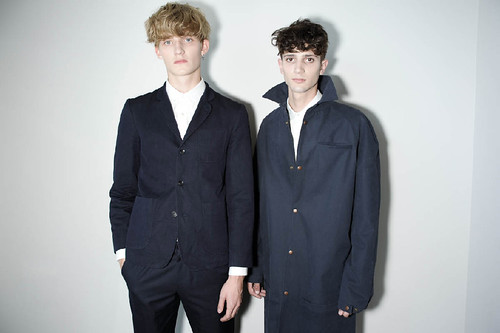
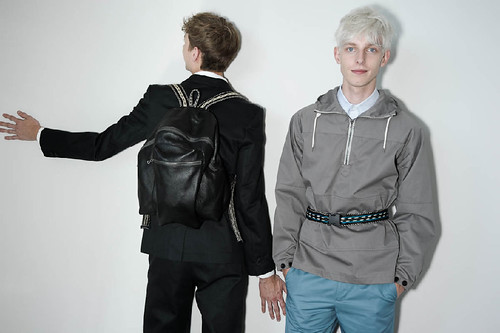
Menswear is tricky. There is a fine balancing act between creating something both exciting and wearable and designing clothes that are covetable on both the catwalk and the street. Menswear could be terrifically dull. Who would be a menswear designer, eh? Well, thankfully Patrik Ervell took up the mantle in 2005 and has since confidently and assuredly made his marl on the industry. For Ervell, the job is one of nuances. Menswear is about details. Not just the details of one garment, but the accumulative effect when you throw them together. He is a designer who creates classic yet forward thinking menswear. In each collection there is always a sense of clean cut minimalism showcased in his simple lines and impeccably sharp tailoring. This signature tends to be fused with an unexpected mix of fabrics. Each season the designer opts to focus on one fabric. Ervell believes that it is in within the realm of outerwear where designers can really push menswear forward and for AW10, the modified Duffel coats in transparent vinyl and the handmade latex rubber raincoats undoubtedly shoved the discipline forward. For SS11 it was horse hair braid. It was used in shoelaces, belting and backpacks. It’s extremely tough, masculine and durable...
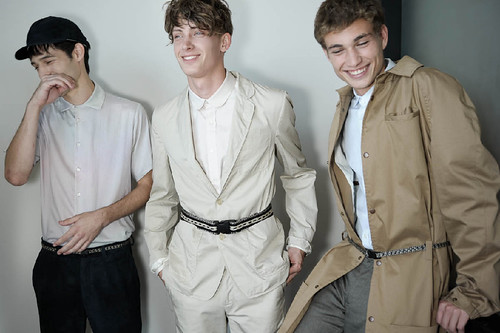
SS11 backstage photography by Morgan O'Donovan for Dazed Digital.
The truth is, most men tend to hone in a style for themselves that they stick to for life. Ervell is one of the few designers who recognises this, which is why he makes captivating clothes that are built to last.
Wednesday, October 27, 2010
Magazines in the Spotlight: Encens
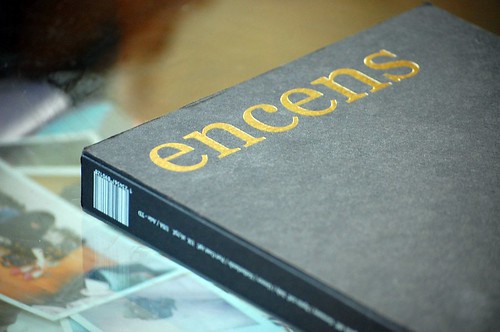
Regular readers may have noticed that it has been quite some time since our last 'Magazine In The Spotlight' post but this is not want of trying. I have been frequently and somewhat furiously finger flicking my way through the racks at newsagents and bookstores far and wide before leaving empty handed. Of course, I have encountered the usual suspects but for one reason or another these have failed to truly excite me and therefore warrant a post. I relayed my woes during a recent shopping jaunt at b Store and thankfully proprietor Matthew Murphy stepped in and offered the name of a title that had previously been unknown to me, Encens. His enthusiasm for the title was infectious. As I left the store with my purchases I instantly began my search of Soho for the publication which came to fruition at the ever reliable Compton News. Since finding it I have struggled to put it down which is no easy task given the weight of this style beast.
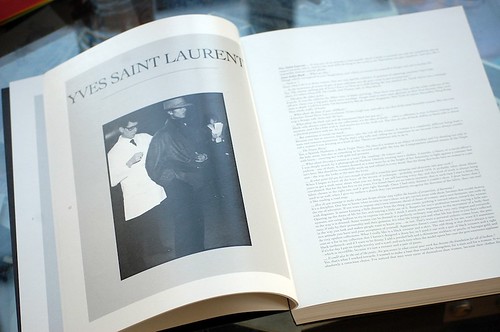
Encens number twenty six stands apart from previous issues as it signals their departure from the bi-annual format. Now published once yearly, the publication has taken on several properties which would classify it closer to a book. Firstly, the thickness and hardcover bound, its qualities as an object are just as powerful as the visual stories inside. During his Fashion Pioneers talk with Imran Ahmed, Jefferson Hack highlighted the growing importance of specialisation and what visionary science fiction author and futurist William Gibson terms mooks: “a hybrid of a book and a magazine where stories can be told in depth with beautiful photography.” Encens is undoubtedly more 'mook' than magazine. It is an exploration of the two editors, Samuel Drira and Sybille Walter, aesthetics and something of a manifesto against disposable fashion. Stylist Drira and photographer Walter share a passion for the drape and fall of clothing, a subtle tailoring and a softness of finish and form. Throughout this weighty hardback, there is an incessant delivery of their vision as opposed to a summation of the trends or season based investigations that we have come to expect from style magazines. This vision is contained is shared within everything from an interview with Yves Saint Laurent taken from Vogue in November 1983 to a celebration of the menswear design talent of Damir Doma and Kris Van Assche. Despite the temptation to scan every single page for you, I've decided to pick out a few highlights. Let the images inspire...
Moving back and forth from the present to the past, the editorials and features have a timeless quality. Fashion magazines tend to constantly strive forward. Even though the latest collections may have been influenced by styles or characters from yesteryear, these influences tend to be ignored. Magazines are blinkered to the past. Encens however, takes a fond gaze at the aesthetics of the past which still should have clout today. The publications stands for an independent and long terms approach. Neither Dirra nor Walter are obsessed with clothes of the moment. For them, the best fashion has three common denominators - simplicity and style but also a sense of timelessness, the capacity to either be or become a classic. In one feature they celebrate Kris Van Assche and Damir Doma, declaring their designs to be menswear at its best. A fluid silhouette, void of the typical restriction of menswear, stripped of the 'for men only' labels. Both have a desire to render the ready made boxes of menswear, sharing ideals of versatility and a nomadic existence. The following quote from Per Spook in another feature echoes these ideal...
"One of my golden rules is to be at ease in a garment. Men hate feeling confined. Likewise, discretion, rather than disguise. A man's wardrobe must have its own personality, yet not be recognisable. I have always preferred the classicism of a great simplicity, natural materials, cuts that are worn loose, and since my clothes do not have linings, they remain light and supple." Per Spook.
Encens' relevance exists in the very fact that it is not grounded in any sort of fast fashion, instead quite the opposite. Although seasonality is expected in fashion, I respect and admire anyone who turns against those implemented measures of time. I heartily recommend that you add this publication to your reading list, consider it pleasurable homework.
Sunday, October 17, 2010
O: Stars Of The Season
There is little better than waking up at a reasonable hour on a bright Sunday morning in Autumn to the scent of a freshly brewed coffee, knowing that your day consists of very little aside from lounging and reading a copy of your favourite broadsheet. Today was such a morning. In fact it was bettered by the inclusion of O, the Observer's Fashion Supplement by Tank dedicated to fashion four times a year of which menswear is the focus twice. No doubt the winter focused supplement will be well thumbed over the coming hours as I immerse myself in the features on Kris Van Assche, Joe Casely-Hayford, Martyn Bal, Japanese Fashion and Britian's best dressed gangster. However, before I make an ass imprint on the sofa I'd like to share the following feature with you...
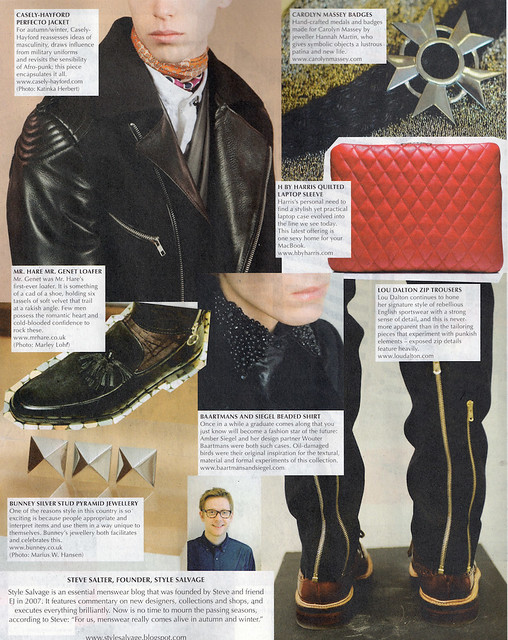
In Stars Of The Season O's editorial team asked a trio of fashion tastemakers to choose their favourites for Autumn/Winter. Amazingly, I was asked. I would never consider myself a tastemaker, to be honest I'm not entirely sure what that label entails but I'm proud to have been asked and pleased to be able to put forward my choices which include the odd piece by a designer that would rarely feature in such a publication. So, alongside Prism's founder Anna Laub and Present's manager Ash, I offered a selection of items that are exciting me this season. It is not the time to mourn the passing seasons because for us, menswear really comes alive when the temperature begins to drop. My choices hopefully reflect the diversity of options throughout the season...
My picks of the season...Casely-Hayford Perfecto Jacket, Hannah Martin for Carolyn Massey medals, H by Harris Quilted laptop bag, Lou Dalton zip trousers, Baartmans and Siegel beaded shirt, Bunney silver stud and Mr Hare Genet loafers.
Now, if you'll excuse I'm going to return to my lazy Sunday. Once I've digested the rest of the supplement I will no doubt offer up a full review but if you do have a chance to pick yourself up a copy, please do because you will not regret it.
Sunday, July 18, 2010
Modesty of fashion
The new modesty? Club collar shirt from Unconditional.
After a long week I shunned the chance to go out and instead chose a quiet night in. In addition to catching up with a few podcasts I had a copy of Elle Collections to keep me company. You might question why I would admit to this on the pages of the blog but I'm not ashamed by it. I rather enjoyed my quiet Friday night. Now, of course this guide for Autumn Winter 2010 but I was struck by the publications diverse mix of season summation. Most biannual guides purely focus on the goings on of the catwalk by using cut outs and little else. Elle Collections manages to bring the collections and trends to life in a way that is sorely lacking in similar men's fashion publications. In addition to beautiful imagery the issue is bursting with inspiring, well written text. I could bore some of you with extracts from Germaine Greer's piece The New Age or with nuggets from both sides of the fence on the Fur Debate but it is the Five Things we love feature that really left a lasting impression on me, Mark Hooper's suggestion of Modesty in particular...
Modesty. Less flesh, more clothes, demure is the new sexy.
"In the grand scheme of things, it's probably a good thing that the British are no longer considered a nation of prudes and stiff-laced Victorian killjoys. But sometimes (usually as I'm surveying the war zone of binge drinking vulgarians on the high street of a weekend), I can't help thinking we've lost something along the way.
Like it or not, modesty is part of our national physche. Understatement is what we do best, from our tongue in cheek humour to our inclination towards tolerance over extremism. It might be something to do with the weather, we're literally mild by nature. And it used to translate to our dress sense as well. Even Beau Brummel, the archetypal 19th century dandy, preached the value of good style over peacock fashion, famously declaring of a person whose dress sense caused heads to turn, 'Then he is not well dressed.'"
Modesty as loved by Mark Hooper (editor of Electric!).
Hooper went on to describe that Brummel would have approved of this season's womenswear collections, where modesty and purism were the most buzzwords - most notably with Phoebe Philo's designs for Celine (If I were a woman I would long for Celine, hell I long for Celine as it is!). Of course, the wonderful world of menswear has always been the more conservative. Where extremes are measured in cuff lengths. The details make the difference. With the whirlwinds of fashion weeks though it can be quite easy to forget. This concept of modest but well dressed is something I will explore further this season and next. What's wrong with being a little stiff laced?
Monday, June 21, 2010
Epsom BA Graduate Showcase: Lewis Chong
Over the last few weeks we have introduced a number of our favourite Menswear design students from colleges throughout the UK and beyond. Having attended Graduate Fashion Week last week my blinkered eyes have opened up to a talented contingent of graduates from other disciplines. None more so than than the finalists for the Hammerson Fashion Innovation Award which all graduated from the UCA Epsom. Now, I am fascinated by the different perspectives on what the future holds for traditional print magazines. Be it the rise of fanzines or the evolution towards mooks, the magazines that have provoked a collective sense of ennui in recent times with either evolve or die.
The Hammerson Fashion Innovation Award restores my faith in the future of fashion journalism. One of my favourite finalists was Lewis Chong who was nominated for a magazine project based on augemented reality, Binary. In his editor's letter, Chong describes the seductive, tactile nature of paper and mentions how this has often been a stumbling point for the new wave of digital magazines. His solution uses the ingenious method of augmented reality as access points to the content, both in fun and easy sticker form and in limited edition digitally printed polo shirts, allowing Binary to combine the physical with the virtual (a demonstration video can be viewed here). Here we talk to the talented graduate to learn more about his project, his thoughts on the industry and his hopes for the future...
SS: What was the driving catalyst for Binary magazine?
Lewis Chong: As much as I love printed magazines, I wanted something else with Binary. A few ideas where thrown about then I started looking at augmented reality and realised it would be the perfect device, and the interactivity does compensate somewhat for the loss of paper.
SS: What's to become of the magazine?
Lewis Chong: There is a whole investigative feature in Binary about what's to become of the magazine. To be honest, it's pretty hard to try suggest what the future holds but we can have an educated guess. The amount of jobs or opportunities around now for graduates, apart from internships, is pretty bleak so people need to get together and start new ventures. The popularity and power of the internet is incredible and I think it's only going to develop further.
Lewis Chong: As much as I love printed magazines, I wanted something else with Binary. A few ideas where thrown about then I started looking at augmented reality and realised it would be the perfect device, and the interactivity does compensate somewhat for the loss of paper.
SS: What's to become of the magazine?
Lewis Chong: There is a whole investigative feature in Binary about what's to become of the magazine. To be honest, it's pretty hard to try suggest what the future holds but we can have an educated guess. The amount of jobs or opportunities around now for graduates, apart from internships, is pretty bleak so people need to get together and start new ventures. The popularity and power of the internet is incredible and I think it's only going to develop further.
SS: You mention that you've grown tired of magazines but that hasn't always been the case. What were the magazines that you just had to buy each month, quarterly or biannually? Which magazines have you loved over the years? Are there any today that still excite and inspire you?
Lewis Chong: As I specialised in fashion journalism I've always tried to read a wide variety of publications. My first real love was POP magazine when it was under Katie Grand. It had never even crossed my mind before that fashion, style and writing could combine in such a way. That's why I was especially pleased when Katie said she would contribute to Binary.
Generally, the magazines I tend to buy are Italian Vogue and V magazine for the visuals, Fantastic Man and Hercules for the men's fashion, National Geographic for the photography and New Scientist for the articles.
SS: Binary uses the ingenious method of augmented reality as access points to the content, both in fun and easy sticker form and in limited edition digitally printed polo shirts, allowing Binary to combine the physical with the virtual. What attracted you to this type of technology in particular?
Lewis Chong: What particularly interested me was its simplicity. The paper and the technology, it's almost like some sort of virtual origami.
SS: How did the collaboration with CSM MA student Shaun Sampson arise and how did the collaboration develop?
Lewis Chong: Shaun is a friend of mine, he has worked with the designer Jeremy Scott for a few years previously and he was the ideal designer to represent the magazine: he's young, ambitious, skilled and has a brilliant outlook on the world.
SS: With fashion, innovation and modernity in mind, the contents include a fabulous talk with Katie Grand on technology, a catch up with Kim Jones and Tim Blanks discusses conspiracy. For a debut issue the content is remarkable, made even more so by the fact that all written content was created by you. Talk us through the experience of creating Binary. What were the highlights?
Lewis Chong: The accumulation of my thoughts and ideas that were realised in the magazine was the best part about making it. Each interview in the magazine was done in person, to provide that intimate touch, and I am really thankful to everyone who contributed. It is not only the case that they are respected faces within the industry, they are intriguing individuals with insightful opinions. Binary definitely wouldn't of been the same without them.
SS: I'm going to appropriate one of the questions you asked Katie Grand....How well do you think fashion binds with technology?
Lewis Chong: The technology used to create the clothes we wear does develop. Better machines with better dyes using better operating systems, but I don't know, fashion and technology in my mind only seems to help create an image of how to make clothes even faster, even more mass produced and I don't think this is the way forward. The technology we have should be used to help personalise fashion again, with less of the dispensable, throw away notion we have now.
SS: With the emergence of breathtaking fashion films and greater accessibility of fashion shows thanks to live feeds, we've seen a discernible shift in recent seasons. What has been your take on the approach of the large fashion houses? How do you see it developing?
Lewis Chong: I can only see the presence of the fashion film increase. As shows become more and more costly to produce, other options are bound to arise. Especially for more emerging designers, who cannot afford to present a collection or even compile a printed look book, will turn to the video. How long though before the medium has been over saturated?
SS: Finally, what next? What would you like to achieve in latter half of 2010 and beyond?
Lewis Chong: What's next? Hopefully I'm looking to produce another issue of Binary and hopefully publish some of my written work elsewhere.
----------
With the emergence of breathtaking fashion films and greater accessibility of fashion shows thanks to live feeds, we've seen a discernible shift in recent seasons towards technology. How magazines exist in the modern world is intriguingly uncertain. That said, I'm quite sure they will exist in a myriad of forms and will continue to be enjoyed by many.
Subscribe to:
Posts (Atom)